
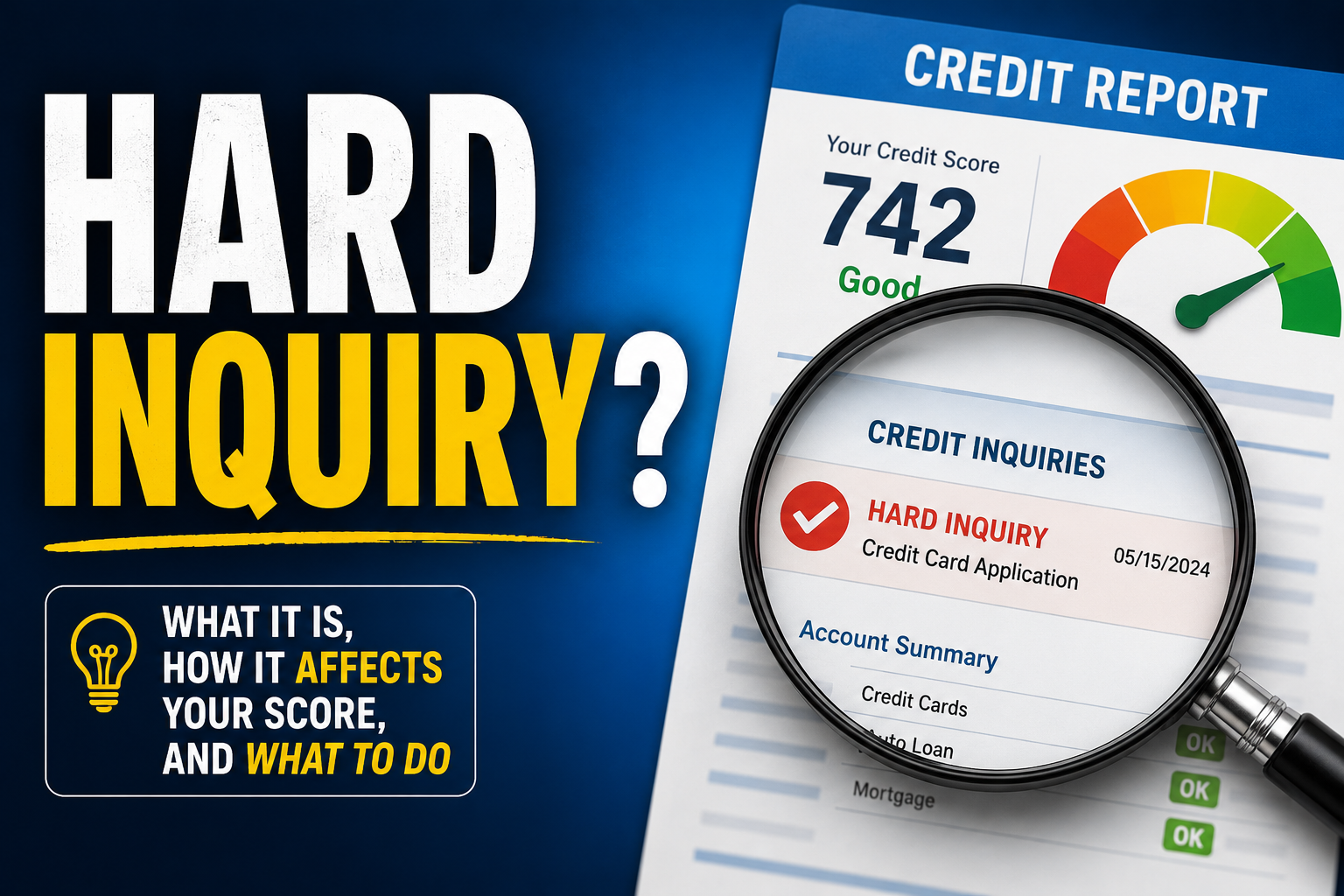
What Is a Hard Inquiry on Your Credit Report? Everything You Need to Know
What Is a Hard Inquiry on Your Credit Report?
You apply for a new credit card. Or maybe you’re shopping for a car loan. A few days later, you check your credit report and see something called a hard inquiry.
Should you worry?
Probably not.
A hard inquiry is a normal part of applying for credit. It can lower your credit score a little, but most people make it sound scarier than it really is. I’d worry a lot more about missing a payment than getting one hard inquiry. That’s where people usually get tripped up.
Hard Inquiry at a Glance
| Question | Answer |
|---|---|
| Does it affect your credit score? | Yes, usually by a few points. |
| How long does it stay on your credit report? | Up to two years. |
| How long does it affect your score? | Usually about one year. |
| Can you remove it? | Only if it’s inaccurate or unauthorized. |
| Should you avoid them? | Yes, but don’t panic over one or two. |
What Is a Hard Inquiry?
A hard inquiry happens when a lender checks your credit report because you’ve applied for new credit.
They’re trying to answer one simple question.
Can this person handle another loan or credit card?
That review becomes part of your credit history.
Common situations that create a hard inquiry include:
- Applying for a credit card
- Applying for a mortgage
- Financing a vehicle
- Applying for a personal loan
- Opening a home equity loan
- Requesting certain lines of credit
If you didn’t apply for credit, a hard inquiry generally shouldn’t appear on your report.
Hard Inquiry vs. Soft Inquiry
People confuse these all the time.
A hard inquiry can affect your credit score.
A soft inquiry can’t.
That’s the biggest difference.
Soft inquiries happen when:
- You check your own credit score
- A company pre-approves you for a credit card
- An employer reviews your credit (when allowed)
- An insurance company checks your credit
- Existing lenders review your account
You can check your own credit report every day if you want. It won’t hurt your score.
How Much Does a Hard Inquiry Affect Your Credit Score?
Usually?
Not much.
For most people, one hard inquiry lowers a credit score by about five points or less.
Sometimes there’s no noticeable change at all.
Your overall credit profile matters much more.
Someone with a long history of responsible credit may barely notice a difference. Someone with a short credit history and several recent applications may see a larger impact.
When Hard Inquiries Become a Problem
Here’s where people get themselves into trouble.
One inquiry?
No big deal.
Ten inquiries in three months?
Now lenders start asking questions.
Multiple hard inquiries may suggest you’re taking on more debt than you can manage. That can make lenders nervous.
Think about it from their perspective.
If someone suddenly applies for six credit cards, two personal loans, and a car loan in one month, what would you think?
Exactly.
Shopping Around Doesn’t Always Hurt You
This surprises a lot of people.
Credit scoring models understand you’re going to compare lenders before making a big purchase.
If you’re shopping for:
- A mortgage
- An auto loan
- Certain student loans
Multiple inquiries made within a short shopping window are often treated as a single inquiry for scoring purposes.
So compare rates.
Just don’t spread your applications over several months.
How Long Does a Hard Inquiry Stay on Your Credit Report?
A hard inquiry stays on your credit report for up to two years.
The good news?
Its effect on your credit score usually fades much sooner.
Most scoring models stop giving significant weight to a hard inquiry after about twelve months.
Time really does help here.
Can You Remove a Hard Inquiry?
Sometimes.
But only if it shouldn’t be there.
You may be able to dispute a hard inquiry if:
- You never applied for credit.
- The lender checked your report without permission.
- The inquiry resulted from identity theft.
- The information is inaccurate.
You generally can’t remove a legitimate hard inquiry simply because you changed your mind or didn’t like the outcome.
How to Minimize the Impact of Hard Inquiries
The easiest strategy is simple.
Don’t apply for credit unless you actually need it.
Before submitting an application:
- Check your credit score.
- Compare lenders first.
- Apply within the same shopping window for mortgages or auto loans.
- Avoid opening several new accounts at once.
And here’s something I tell friends all the time. Don’t chase every store credit card just because they’re offering 15% off a blender you’ll probably forget about next week. That discount disappears fast if you start paying interest.
Hard Inquiry Myths
Myth: Every hard inquiry destroys your credit score.
Not true.
One inquiry usually has a very small effect.
Myth: Checking your own credit hurts your score.
Nope.
Checking your own credit creates a soft inquiry.
Myth: Hard inquiries stay forever.
They don’t.
They usually disappear after two years.
Myth: You should never apply for new credit.
Also false.
Sometimes opening a new account makes perfect financial sense. Just be intentional about it.
What Lenders Really Care About
Here’s the part that gets overlooked.
Lenders care much more about whether you pay your bills on time.
They care about your credit card balances.
They care about how much debt you already have.
A couple of hard inquiries?
That’s usually way down the list.
If I had to choose between one hard inquiry and one late payment, I’d take the hard inquiry every single time.
Key Takeaways
A hard inquiry is a normal part of applying for credit.
One or two inquiries usually won’t have a major impact on your credit score.
Applying for several loans or credit cards in a short period can become a red flag.
Shopping around for mortgages and auto loans within a short time frame is generally treated more favorably by credit scoring models.
The best way to protect your credit is to apply for new credit only when it makes sense and continue making every payment on time.
Frequently Asked Questions
Does a hard inquiry mean I was approved?
No. A hard inquiry only means the lender reviewed your credit report. Approval depends on many other factors.
Can I dispute a hard inquiry?
Yes, if it’s inaccurate or unauthorized. Legitimate hard inquiries usually can’t be removed.
How many hard inquiries are too many?
There’s no magic number, but several inquiries in a short period may concern lenders, especially if you’re applying for multiple types of credit.
Is one hard inquiry bad?
No. One hard inquiry generally has little impact on your credit score.
Will paying off my credit card remove hard inquiries?
No. Paying off debt improves other parts of your credit profile, but it doesn’t remove legitimate hard inquiries from your credit report.
Can employers see hard inquiries?
Employers that are permitted to review your credit generally receive a version of your credit report that doesn’t include your credit score. Whether they see inquiries depends on the report provided and applicable laws.